SEO Onpage Checklist
OnPage SEO is done on the pages of the website itself. It is done to optimize your website for search engines and users. We consider the following points while performing On Page SEO for your Website. What is on-page SEO? On-page SEO…
On this page
OnPage SEO is done on the pages of the website itself. It is done to optimize your website for search engines and users. We consider the following points while performing On Page SEO for your Website.
What is on-page SEO?
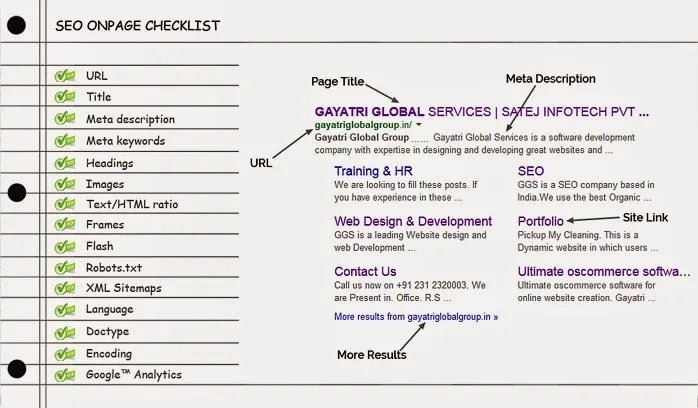
On-page SEO is the work done on the pages of your website to make them clear to search engines and useful to visitors. The checklist above lists fifteen items, and the search result in the picture shows where the page title, meta description, URL and site links appear. Here is what each item means, with a note where search engines have changed.
The fifteen items
- URL: a short, readable address that describes the page.
- Title: the page title shown in search results. Write a different one for each page and keep it within about 60 characters.
- Meta description: the summary shown under the title in search results. It does not change your ranking directly, but a clear one persuades people to click.
- Meta keywords: a tag that lists keywords. Google no longer uses it, so it is not worth spending time on.
- Headings: one main heading (H1) per page, followed by subheadings that organise the content.
- Images: compressed so they load quickly, with descriptive file names and alt text.
- Text to HTML ratio: the share of readable text compared to code. It is not a ranking factor on its own, but pages with almost no text give search engines little to understand.
- Frames: pages built from frames are hard for search engines to read, so avoid them.
- Flash: obsolete and unsupported on modern browsers and phones. Do not use it.
- Robots.txt: a file that tells search engines which parts of the site they may crawl.
- XML sitemaps: a list of your pages that helps search engines find them.
- Language: declare the page language so browsers and search engines handle the text properly.
- Doctype: the declaration at the top of the page that tells the browser which version of HTML it is reading.
- Encoding: the character set, usually UTF-8, so that all letters and symbols display correctly.
- Analytics: a tool such as Google Analytics, so you can see how many people visit and what they do.
Where to start
If you only have time for a few items, start with the title, the meta description, the headings and the images on your most important pages. Then check the sitemap and the robots file. If you would like us to review your pages, read about our SEO and GEO services.
Contact us today to discuss your requirements.