
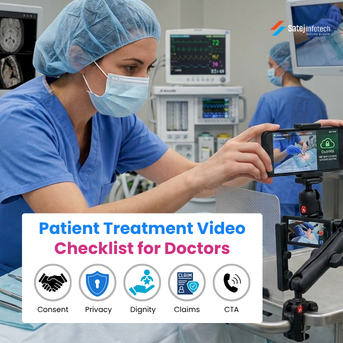
Patient Treatment Video Checklist for Doctors: 10 Things to Check Before You Post
Planning to post a treatment or procedure video on Instagram? Take 30 seconds to review these 10 points before you hit Publish.
Videos can be a powerful way for doctors to explain medical procedures, educate patients, and show what a treatment involves.
But when a patient is visible in the video, there are additional considerations.
The question isn’t only:
“Do I have permission to film this?”
You also need to consider consent, privacy, dignity, purpose, claims, and the way the finished video is presented.
Use this checklist before publishing a treatment or procedure Reel.
1. Do I Have the Patient's Consent?
Start with consent.
Ask yourself:
☐ Has the patient clearly consented to being filmed?
☐ Do they know that the video may be shared publicly?
☐ Do they understand that the content may appear on social media?
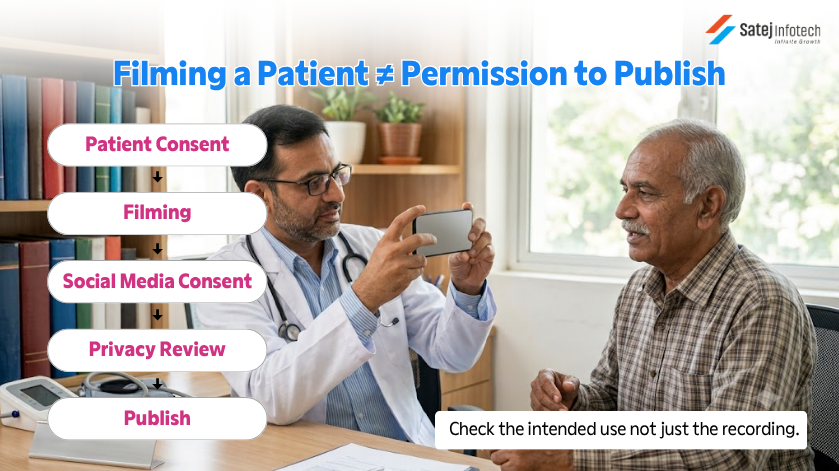
Consent to medical treatment and consent to being filmed are not necessarily the same thing.
Make sure you have considered consent specifically in relation to the recording and use of the video.
For broader guidance on using patient-related content across social media, also review the Patient Testimonial & Social Media Checklist for Doctors.
2. Is the Consent Clear About Social Media Use?
Think beyond the filming itself.
Ask:
“Did the patient understand that this video could be publicly shared online?”
There is an important difference between:
Being filmed for a clinical purpose
and
Being filmed with the intention of publishing the footage publicly.
If the video is intended for Instagram, Facebook, YouTube, your website, or other public platforms, the consent should appropriately cover that use.
If you regularly publish patient-related content on social media, the Patient Testimonial & Social Media Checklist for Doctors can help you review how patient experiences and related content are presented.
3. Have I Protected the Patient's Privacy?
Watch the complete video carefully.
Check whether it reveals:
- Patient’s face
- Name
- Medical records
- Reports
- Screens
- Phone numbers
- Personal information
- Other identifying details
Also check the background.
Sometimes private information appears accidentally on:
- Computer screens
- Case sheets
- Monitor displays
- Documents
- Clinic boards
Before publishing, watch the video from beginning to end.
Look for information—not just the patient.
The same principle applies to patient testimonials and other patient-focused social media content. Review your Patient Testimonial & Social Media Checklist for Doctors before publishing.
4. Does the Video Reveal Sensitive Information?
Ask:
“Does this video reveal more about the patient’s medical condition than is necessary for the educational purpose?”
A procedure video may contain sensitive clinical information.
The fact that something was captured on camera doesn’t necessarily mean it needs to be published.
Show only what is necessary for the intended educational purpose, and carefully consider whether sensitive or unnecessary details should be included.
5. Is the Patient Being Shown With Dignity?
This is particularly important with treatment and procedure videos.
Ask:
☐ Is the patient being shown respectfully?
☐ Is the procedure or body area sensitive or intimate?
☐ Is the camera angle appropriate?
☐ Would the presentation remain respectful if the Reel received thousands of views?
A treatment may be routine for a medical professional.
For the patient, it can be a deeply personal experience.
Patient dignity should come before engagement.
This principle also applies when sharing patient testimonials, stories and experiences. Review the Patient Testimonial & Social Media Checklist for Doctors before publishing patient-related content.
6. Why Am I Posting This Video?
Ask yourself one simple question:
“Am I explaining a medical procedure, or am I using the procedure to promote my practice?”
There is a difference.
Educational approach:
“Here’s what happens during this procedure and what patients may generally expect.”
Promotional approach:
“Look at the amazing results we achieved. You can get the same result.”
The first focuses on education.
The second can create expectations about treatment outcomes.
Before posting, consider the purpose of the entire Reel, not just the footage.
If the Reel moves from education into promotion, review the proposed wording using your Doctor Marketing Claims Checklist before publishing.
7. Does the Video Make a Treatment Outcome Claim?
Don’t review only your footage.
Review:
Voiceover + On-screen Text + Caption
Look for language such as:
❌ Guaranteed results
❌ 100% success
❌ Permanent cure
❌ “This will work for you.”
❌ “Get the same results.”
These statements can create unrealistic expectations about medical outcomes.
If you are explaining a procedure, focus on what the procedure involves rather than promising what a particular patient will achieve.
8. Am I Turning One Patient's Outcome Into a Promise?
One patient’s experience is exactly that:
One patient’s experience.
Ask:
☐ Does the Reel suggest another patient will achieve the same result?
☐ Does the before/after or treatment footage make the outcome look guaranteed?
☐ Does the caption imply that everyone will respond similarly?
Remember:
One patient’s experience is not a guarantee of another patient’s outcome.
Treatment outcomes can vary between individuals.
Your content should not turn an individual experience into a universal promise.
If your treatment Reel also includes before-and-after images or outcome comparisons, review the Before & After Content Checklist for Doctors before publishing.
9. Does My CTA Change the Purpose of the Video?
Your Reel may begin as education.
But the CTA can change the overall tone.
Be particularly careful with:
❌ “Book now and get the same results.”
❌ “DM us for your treatment today.”
❌ “Limited appointments available.”
Ask:
“Does my CTA keep this educational—or does it turn the video into a promotional message?”
Always review the video + caption + CTA together.
10. Review the Entire Reel
🎬 This Is the Final and Most Important Check.
Don’t review only the footage.
Review the complete communication:
A video that looks educational on its own can become promotional because of the wording added later.
Before publishing, ask:
“What will a prospective patient believe after watching this entire Reel?”
That is what you need to evaluate.
For an additional review of professional and ethical considerations before posting, use the NMC-Safe Posting Checklist for Doctors.
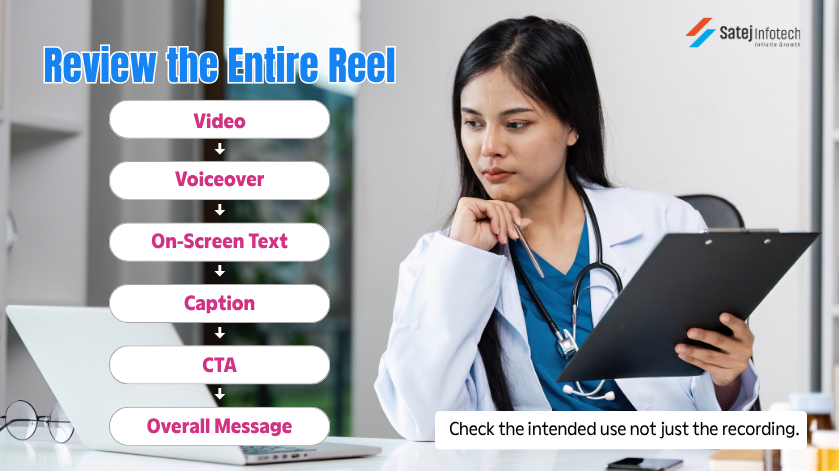
The 5-Second Check
✅ Before You Publish, Ask
CONSENT?
Does the patient understand and agree to the recording and public use?
PRIVACY?
Is identifying or sensitive information protected?
DIGNITY?
Is the patient presented respectfully?
EDUCATIONAL PURPOSE?
Am I explaining rather than showcasing a medical outcome?
NO PROMISES?
Have I avoided guaranteed or unrealistic treatment claims?
⚠️ If you’re unsure about even one, pause and review the content before publishing.
Looking for practical ways to simplify your content planning and digital marketing workflow? Explore our AI Tools for Doctors resource to discover tools that can support content creation, planning, and day-to-day marketing tasks.
The Key Takeaway
A patient’s permission to be filmed doesn’t automatically answer whether the finished Reel is appropriate to publish.
The final communication matters.
So before posting, review:
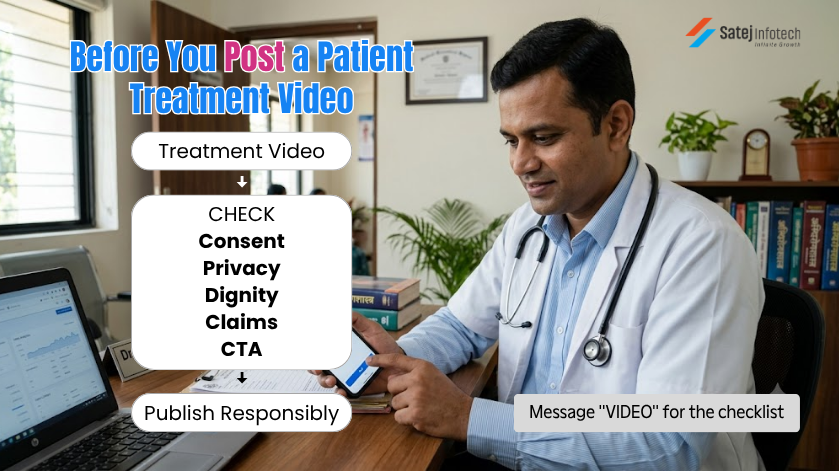
Consent + Privacy + Dignity + Purpose + Claims + CTA
And remember:
Don’t just check the video. Check the entire message.
Want More Practical Marketing Guidance for Doctors?
At Doctor Growth System by Satej Infotech, we help doctors build their digital presence through practical, patient-focused digital marketing.
Our services include:
- Social Media Strategy
- Doctor Branding
- Content Planning
- Local SEO
- Google Business Profile Optimization
- Healthcare Website Development
- Patient-focused Digital Marketing
Want a FREE 15 Min Marketing Audit for Your Practice?
Click the WhatsApp button below. 💬 Message “FREE 15 min Marketing Audit” on WhatsAppFrequently Asked Questions
Doctors should consider obtaining clear consent for filming and for the intended use of the recording. Consent to treatment should not automatically be assumed to mean consent to filming or public social media publication.
Treatment videos should be carefully reviewed for patient consent, privacy, dignity, sensitive information, purpose, treatment-outcome claims, and the overall presentation of the Reel.
Consent is an important consideration, but it is not the only one. Doctors should also consider patient privacy, dignity, professional conduct, the purpose of the content, and whether the finished communication creates unrealistic expectations.
If a patient is identifiable, privacy and consent considerations become particularly important. Doctors should ensure that the intended use is appropriately consented to and that the overall presentation remains professionally appropriate.
Doctors may use social media for professional and educational communication, but procedure-related content involving patients should be carefully reviewed before publication. The complete communication—not only the footage—should be considered.
Doctors should distinguish educational communication from promotional messaging. Treatment videos that are combined with outcome promises, exaggerated claims, or strong solicitation language require particular caution.
Doctors should avoid presenting one patient's outcome as a result another patient can expect or is guaranteed to achieve. Individual treatment outcomes can vary.
At minimum, review consent, privacy, dignity, educational purpose, treatment claims, voiceover, on-screen text, caption, and CTA before publishing.