NMC Guidelines on Ethical Advertising 6 Oct 2026: What Doctors Need to Know About Instagram, AI, Google Ads and Digital Marketing
The National Medical Commission (NMC) issued a public notice dated 6 October 2026, enclosing its Guidelines on Ethical Advertising and Public Communication by Hospitals/Medical Institutions and Registered Medical Practitioners. The document is available on the official NMC website. The notice…
On this page
The National Medical Commission (NMC) issued a public notice dated 6 October 2026, enclosing its Guidelines on Ethical Advertising and Public Communication by Hospitals/Medical Institutions and Registered Medical Practitioners.
The document is available on the official NMC website. The notice states that the guidelines come into force with immediate effect.
For doctors, the document raises important practical questions.
Can you continue posting educational Reels on Instagram? Can you promote a factual clinic profile? What about Google Ads, patient testimonials, before-and-after photographs, AI-generated images and digital marketing agencies?
The purpose of this article is to help doctors understand what the October 2026 document says, how it relates to earlier professional-conduct principles, and what to review before publishing or promoting medical content online.
The central message is not that all digital visibility must stop. It is that public communication must be assessed against professional ethics, patient privacy, accuracy and the restrictions on advertising and patient solicitation.
This article follows the supplied 13-page NMC notice, with references to its relevant sections. It distinguishes the document’s express wording from practical interpretation. It is educational guidance, not legal advice.
What Are the October 2026 NMC Guidelines?
The document is titled Guidelines on Ethical Advertising and Public Communication by Hospitals/Medical Institutions and Registered Medical Practitioners.
Its stated objectives include:
- Preserving the dignity of the medical profession.
- Preventing the commercialisation of healthcare.
- Protecting patient interests and preventing misleading medical claims.
- Ensuring that healthcare communication is factual, ethical and evidence-based.
- Protecting patient privacy and autonomy.
- Addressing advertising and promotional communication disseminated through digital and emerging technologies.
These objectives appear in the preamble and objectives section of the supplied notice, particularly Section 2.1.
Who does the document cover?
Section 4 addresses the scope and applicability of the guidelines to registered medical practitioners and hospital or medical institutions, with specific provisions for each.
The document also refers to advertising through social media, websites, digital platforms, influencers, search engines and other forms of public communication.
Doctors should distinguish between the rules specifically addressed to registered medical practitioners and those directed at hospitals or medical institutions. The provisions applicable to one category should not automatically be assumed to apply identically to every other healthcare provider.
What is the current status of the notice?
The NMC website lists the 6 October 2026 guidelines under its official notices, and the supplied notice states that they take effect immediately.
That establishes what the notice says and how the NMC has published it. It does not remove the need to examine its relationship with existing statutes, regulations, applicable State Medical Council requirements and any subsequent official clarifications.
Doctors should check the official NMC source again before relying on this article for a specific decision.
Are the Guidelines Completely New?
No single answer accurately describes every provision.
The October document contains detailed provisions on digital communication and AI, but several underlying professional-conduct principles predate it.
The earlier Indian Medical Council (Professional Conduct, Etiquette and Ethics) Regulations, 2002, as amended, already addressed patient solicitation, self-advertisement, endorsements of commercial products, boasting about cases and cures, and commissions connected with procuring patients. The NMC continues to list these regulations in its official rules and regulations resources.
The October 2026 document gives more detailed treatment to modern forms of communication, including AI-generated promotional content, online reviews and rankings, digital marketing agencies, influencer campaigns, patient privacy and clinical images.
A useful way to understand the difference is to separate three categories.
| Category | What it means |
| Existing principle | A professional-conduct concern already addressed in earlier rules, such as patient solicitation or misleading self-promotion. |
| More detailed treatment | A familiar principle explained in the context of modern digital platforms, paid campaigns or online content. |
| Specific AI-related provisions | Section 7.2 expressly addresses AI-generated or AI-assisted promotional content, synthetic endorsements and the use of patient information in AI systems. |
For example, restrictions on commercial product endorsements were not invented by Instagram. Earlier professional-conduct regulations already addressed doctors endorsing medicines and commercial products. The new document places such concerns within a broader framework covering contemporary digital communication.
The practical takeaway: Do not assume every restriction is new, but do not assume the October document merely repeats older wording either.
The document should be read as a whole, alongside the applicable existing rules.
What Types of Online Communication Raise Ethical Concerns?
Section 8.1 of the October 2026 document sets out advertising restrictions and permitted communications for registered medical practitioners. Sections 7.2–7.6 also address prohibited advertising practices and exemptions.
Here are the key areas doctors and their marketing teams should review.
1. Misleading claims and unrealistic promises
Section 8.1(iii) identifies claims about personal achievements or professional success rates that are unsupported or unverifiable, including examples such as “Guaranteed cures,” “Best doctors,” “No. 1 Specialist” and “100% success rate.”
Section 8.1(vi) also addresses statements that create unrealistic expectations, misrepresent treatment outcomes or encourage patients to believe that a treatment will produce a particular result.
For example:
- “Guaranteed cure for infertility.”
- “100% success rate for every patient.”
- “Permanent cure for all skin problems.”
These statements can mislead patients about the likely benefits or certainty of treatment.
Practical approach: Communicate medical information accurately. Avoid guarantees, unsupported superlatives and claims that cannot be substantiated.
2. Professional superiority and comparisons
Section 8.1(ix) addresses comparative claims such as “Best,” “No. 1,” “ideal,” “most trusted,” “top,” “number one,” “unmatched” and similar superiority claims, subject to the provision’s stated conditions concerning verifiability and permissibility.
For example:
“Kolhapur’s No. 1 dermatologist” raises a concern about a comparative professional claim.
A factual statement about a doctor’s recognised qualification or specialty is different from claiming superiority over other doctors.
Practical approach: State professional qualifications and areas of practice accurately instead of relying on superiority claims.
3. Advertising that creates unnecessary fear or demand
Section 8.1(i) addresses advertising intended to create unnecessary demand for medical procedures, promote unnecessary diagnostics and promote fear-based marketing.
For example, content that deliberately frightens people into believing they urgently need a procedure without an appropriate medical basis raises an ethical concern.
Public education about genuine warning signs is not the same thing as manufacturing fear to generate demand.
Practical approach: Explain symptoms, prevention and when medical evaluation may be appropriate without exaggeration or unnecessary alarm.
4. Patient solicitation and inducements
Section 8.1(ii) addresses direct or indirect patient solicitation and promotional self-promotion through third parties, including the use of images, voice, testimonials or endorsements as described in that provision.
Section 8.1(vii) addresses promotional offers, gifts, gratuities, referral commissions and similar inducements connected with procuring patients or promoting services.
For example, a campaign promising a gift in return for booking a medical procedure would require particular scrutiny under these restrictions.
Practical approach: Do not treat patient acquisition as an ordinary retail sales exercise. Review the purpose, wording and mechanism of the campaign against the applicable professional requirements.
5. Discounts and offers
Section 8.1(x) addresses discounts, limited-period offers, promotional benefits, free procedures and similar inducements where they are likely to encourage unnecessary medical consultation, diagnostic investigation or treatment.
This wording should not be reduced to an unsupported claim that every factual communication about fees is automatically prohibited.
The same section expressly distinguishes lawful disclosure of charges, packages or fees that is factual, transparent and not misleading.
For example:
- A factual statement of consultation fees is different from a campaign using urgency and inducements to push unnecessary treatment.
- A time-limited medical procedure offer intended to create demand raises a different concern from transparent fee information.
Practical approach: Keep fee communication factual and transparent. Do not use discounts or urgency as a mechanism to encourage unnecessary healthcare.
6. Celebrity and influencer endorsements
Section 8.1(xi) addresses celebrity, influencer, patient and employee endorsements and other promotional relationships used to promote professional services, subject to the terms of the provision.
A marketing agency arranging a celebrity to publicly endorse a doctor or recommend the doctor’s services is therefore an arrangement that needs careful review.
Practical approach: Do not assume that a collaboration becomes acceptable merely because the endorsement is published by another person or account.
7. Commercial product endorsements
Section 8.1(iv), read alongside the earlier professional-conduct framework, addresses endorsement or promotion of commercial products in connection with a doctor’s professional identity.
This is relevant to medicines, supplements, devices, skincare products and other commercial products used in healthcare-related marketing.
For example, a doctor appearing in a paid advertisement recommending a supplement as part of a brand’s promotional campaign raises a different issue from a neutral educational explanation of a class of products.
Practical approach: Review the product, the claim, the doctor’s role and the commercial purpose together.
8. Manipulation of reviews, rankings and engagement
Section 8.1(xii) addresses manipulating reviews, ratings, testimonials, comments, visibility, search rankings or algorithms to create a misleading impression of professional standing.
Examples include:
- Buying fabricated patient reviews.
- Creating fake engagement to imply popularity.
- Manipulating rankings to make a doctor appear more trusted than the evidence supports.
- Arranging artificial reviews that misrepresent actual patient experiences.
Practical approach: Build online visibility through accurate information and genuine public communication. Do not manufacture a misleading reputation.
9. Promotional use of patient cases and clinical results
Section 8.1(v) addresses the publication of cases for promotional purposes, including surgical results and before-and-after photographs, subject to the stated scientific or educational exception.
This is especially important for doctors who publish treatment-result Reels, patient stories or procedure photographs.
The section should be read alongside the separate privacy and consent requirements in Section 6.
Practical approach: Before publishing a patient case, establish whether the content is permitted, whether it serves a genuine scientific or educational purpose, and whether privacy, consent and other applicable requirements have been met.
Can Doctors Use Instagram and Social Media?
Yes, doctors can use digital platforms for professional communication, but the content and manner of communication matter.
The October 2026 document explicitly recognises public-health education and awareness as legitimate activities, while placing conditions on how they are conducted.
Section 5.1 states that medical practitioners may participate in health-awareness programmes, public-health campaigns, educational content and academic discussions, provided such activities do not solicit patients and are not monetised through promotional marketing.
Section 8.2 also identifies certain permitted communications and exceptions, including specified formal announcements, public-health lectures and educational material subject to the stated conditions.
What does this mean in practice?
| Type of content | What doctors should consider |
| Educational Reel explaining PCOS symptoms | Review medical accuracy, purpose, claims and how the content is distributed. |
| General information about diabetes prevention | Public-health education is recognised, subject to the conditions in the guidelines. |
| Doctor’s qualifications and specialty | Use accurate professional information and follow applicable requirements. |
| Clinic address and timings | Factual information should be distinguished from promotional claims. |
| Conference participation | Communicate the activity factually without implying unsupported superiority. |
| Reel encouraging viewers to become the doctor’s patients | Review carefully for patient solicitation and promotional intent. |
| Reel featuring patient results to attract enquiries | Check the restrictions on promotional clinical results and patient content. |
The important distinction is that having a social media account is not the same as using it for prohibited promotion.
However, a post that is educational in appearance may still raise concerns because of its claims, CTA, commercial purpose or distribution.
Can doctors explain symptoms, treatment options and common patient questions?
Doctors can use public-health education to explain general medical concepts, prevention, warning signs and when professional evaluation may be appropriate, subject to the guidelines and other applicable rules.
For example, an educational post explaining common symptoms of PCOS is different in purpose from a post promising that a particular treatment will cure PCOS.
This is a practical distinction, not a guarantee that every educational format is acceptable in every context.
Can doctors display their qualifications, specialty and clinic location?
Section 8.3 addresses factual, objective and verifiable information that hospitals and medical institutions may disseminate, including their name, location, contact details, departments, facilities, equipment, services, emergency services, accreditation status and charges, subject to the restrictions in that section.
Section 9.1 similarly addresses factual information about clinical establishments.
For individual registered medical practitioners, the requirements must also be read alongside Section 8.1 and the relevant professional-conduct rules.
The practical objective is to communicate professional information accurately without turning it into a claim of superiority, a promise of results or a patient-solicitation campaign.
Before-and-After Photographs: What Does the October Document Say?
This is one of the most important areas for doctors working in dermatology, cosmetic medicine, surgery, dentistry and other specialties where clinical photographs may be used.
Section 8.1(v) addresses the publication of cases for promotional purposes, the advertisement of surgical results, before-and-after photographs and publicity involving celebrity patients. It provides for a scientific or educational purpose exception, subject to the conditions in the provision and other applicable law.
This means the document should not be interpreted as saying that every clinical photograph is prohibited, nor that every image becomes permissible simply because a doctor calls it educational.
Four situations doctors should distinguish
1. Before-and-after images used to attract patients
An image presented to promote a service or suggest that viewers can expect the same result raises a concern under the restriction on promotional clinical results.
2. Clinical images used for genuine education
A clinical image used in a scientific or educational context needs to be assessed against the exception in Section 8.1(v), the privacy requirements and all other applicable restrictions.
3. An anonymised case discussion
Removing a name may reduce identification risk, but the doctor must consider whether the patient could still be identified from the face, voice, dates, clinical details or surrounding information.
4. Images that identify a patient
Section 6 addresses patient privacy and consent. Even where consent is relevant or obtained, the intended use must also be permitted under the applicable professional requirements.
Does patient consent make every image permissible?
No.
Section 6.2 specifically states that patient consent does not by itself make permissible a testimonial, endorsement, promotional patient story, before-and-after depiction, success claim or other advertising practice prohibited by the guidelines.
Section 6.3 also addresses specific, informed consent and compliance with applicable privacy and data-protection law where legally required.
Before publishing a clinical photograph, ask:
- Is the proposed use permitted under the applicable rules?
- Is the purpose genuinely scientific or educational?
- Could the patient be identified directly or indirectly?
- Is the consent specific and appropriate for the proposed use, where required?
- Could the image mislead viewers about expected outcomes?
- Does the caption or CTA turn the content into a promotional claim?
Practical rule: Review the purpose, image, consent, privacy and complete presentation together. Do not rely on consent or an educational label alone.
Patient Testimonials, Reviews and Success Stories
The October document addresses several forms of patient-related publicity, but doctors should not treat all online reviews and testimonials as identical.
Section 8.1(v) addresses promotional use of patient cases and clinical results. Section 8.1(xi) addresses endorsements, while Section 8.1(xii) addresses the manipulation of reviews, ratings, testimonials, comments, visibility and rankings. Section 6.2 addresses consent and prohibited promotional practices.
What is the difference?
| Situation | What to review |
| A patient independently posts a review on a third-party platform | The review’s existence is different from the doctor soliciting, republishing or manipulating it. Other applicable rules still matter. |
| A doctor reposts a patient’s praise on Instagram | Review whether this constitutes a prohibited endorsement or promotional testimonial under the applicable provisions. |
| A doctor shares a patient’s treatment success story | Consider the specific restrictions on promotional patient cases, outcomes and testimonials. |
| A marketing agency places patient testimonials in a paid advertisement | Review the underlying content, the commercial purpose, the agency’s role and the applicable advertising restrictions. |
| A business purchases fake reviews | Section 8.1(xii) expressly addresses manipulation of reviews and rankings to create a misleading impression of professional standing. |
A genuine review appearing independently on a third-party platform is not necessarily the same situation as a doctor selecting and republishing it as an endorsement.
At the same time, a doctor should not assume that reposting a review is acceptable simply because the patient originally published it.
Practical rule: Distinguish an independent review from doctor-controlled promotional use, and seek clarification when the intended use is not clearly addressed.
AI-Generated Content Under the October 2026 Guidelines
The October document specifically addresses artificial intelligence. This is an important development for doctors and healthcare marketers using AI tools to create content.
Section 7.2 addresses AI-generated or AI-assisted promotional campaigns. It prohibits their use to create misleading, deceptive or unverifiable representations concerning diagnosis, treatment, outcomes, professional qualifications, patient experiences or healthcare services.
It also addresses synthetic patient images, testimonials, voices, clinical outcomes and endorsements or representations purporting to be those of actual patients, registered medical practitioners or other identifiable persons.
The provision additionally addresses disclosure where the artificial nature of materially altered or AI-generated content may affect the audience’s understanding, and the use of patient information as input into AI systems.
Examples of AI use doctors should distinguish
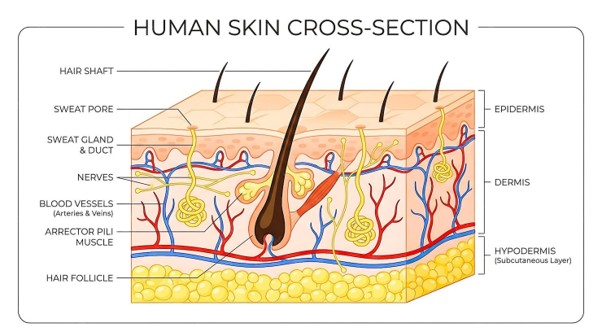
Educational illustration
An illustrative animation explaining the layers of skin or how insulin works may serve an educational purpose. Its accuracy, presentation and context still need to be reviewed.

An AI-generated person presented as an actual patient who received a particular treatment raises a specific concern under Section 7.2.

AI-generated doctor representation
A synthetic representation that purports to be a real doctor, or falsely represents someone’s qualifications or endorsement, requires particular scrutiny.
These examples illustrate the distinction; they do not establish that every use of an AI-generated illustration is permissible or that every AI-assisted image is prohibited.
What should doctors do before using AI content?
- Verify medical facts and claims.
- Do not fabricate patients, treatment outcomes or endorsements.
- Review whether disclosure is required by the circumstances described in Section 7.2.
- Protect patient information, clinical photographs and personal data.
- Review the content’s purpose and presentation, especially if it will be used in promotion.
Adding an “AI-generated” label does not automatically make otherwise prohibited content acceptable. The underlying content and its use must still comply with the applicable requirements.
Can Doctors Run Google Ads or Boost Instagram Reels?
This is one of the most common questions doctors ask digital marketing professionals.
The October document includes digital advertising and sponsored communication within its broader framework. It does not follow that every possible advertising format should be treated as automatically permitted or automatically prohibited without considering the actual communication.
Sections 3.5 and 3.6 define digital advertising and social media broadly, while Sections 5, 7 and 8 address public education, prohibited advertising and professional communication.
Consider these four situations
| Campaign | What requires review |
| Boosting a factual educational Reel | Assess the educational purpose, claims, CTA, audience, paid distribution and applicable restrictions. |
| Promoting a clinic’s basic factual information | Check whether the communication falls within the factual information permitted by the relevant provisions and whether it introduces solicitation or inducements. |
| Running a Google Search Ad | Review the ad text, keywords, destination page, claims and overall purpose against the applicable rules. |
| Promoting a patient testimonial or before-and-after image | Check the specific restrictions on endorsements, patient cases and clinical results before publication or paid distribution. |
Does selecting Engagement make a Reel compliant?
No. Engagement is a Meta advertising objective, not a category under the NMC guidelines.
A Reel can be designed to generate likes, comments and shares, but its content and distribution still need to be reviewed against the applicable professional requirements.
Similarly, an existing organic Reel does not automatically become suitable for paid promotion simply because it has already been published.
What about the landing page?
Review the entire journey:
Ad or boosted Reel → Caption and CTA → Profile or landing page → Next action
A factual educational Reel may link to a page containing promotional claims, patient testimonials or promises of results. Reviewing only the Reel would miss those elements.
What is the safest practical approach?
The October document does not provide a blanket assurance that every educational Reel can be boosted, nor should the position be reduced to a universal ban on every paid format without examining the applicable provisions.
Review the campaign as a whole. If the acceptability of paid educational distribution or a specific advertising format remains uncertain, pause and obtain appropriate professional or regulatory guidance before spending money.
Doctor Websites, SEO and Google Business Profiles
Online visibility is not limited to social media.
Doctors may also have a website, publish educational blogs, maintain a clinic listing and appear in search results.
The October document addresses factual information about medical practitioners and institutions, but it does not specifically regulate every technical detail of search engine optimisation or every Google Business Profile feature.
The key distinction is between the method used to improve discoverability and the claims made through that method.
What should doctors review?
Qualifications and registration details
Ensure professional identity, recognised qualifications and registration details are accurate and presented as required.
Clinic address and timings
Check that factual information is correct and consistent.
Educational blogs
Review medical accuracy, misleading claims, patient privacy and the overall purpose of the content.
Facilities and equipment
Describe available facilities factually. Avoid turning a factual description into an unsupported claim of superiority.
Google Business Profile
Keep the profile accurate. Distinguish a genuine third-party review from a doctor-controlled endorsement or manipulated rating.
Website banners and landing pages
Review headlines, claims, testimonials, photographs, CTAs and any linked advertising campaign.
SEO is a discoverability method. It does not automatically make a page ethical or unethical. The underlying content and how it is used remain important.
Can Doctors Hire Marketing Agencies, Influencers or Third-Party Platforms?
The October document addresses advertising agencies, digital marketing agencies, influencers and online platforms in the context of its restrictions.
Section 8.1(viii) addresses arrangements with agencies and platforms where payments or consideration are linked to procuring or referring individual patients. Sections 8.1(ii), 8.1(xi) and 8.1(xii) address other relevant concerns involving solicitation, endorsements and manipulated online reputation.
This does not mean that hiring a website developer or obtaining technical support is automatically prohibited.
The work being performed and the commercial arrangement matter.
| Activity | Practical consideration |
| A developer builds a factual clinic website | Review the content and applicable professional requirements; technical development alone is not the same as patient procurement. |
| A marketer helps create general educational content | Ensure accuracy, privacy and appropriate communication. |
| An agency receives payment linked to each patient it procures | This raises a specific concern under the provisions addressing patient procurement and referral-linked consideration. |
| An influencer publicly endorses a doctor’s services | Review the restrictions on endorsements and promotional communication. |
| A platform sells a misleading ranking or manipulates reviews | Review Section 8.1(xii) and the applicable provisions on professional standing. |
The key question is not simply whether an agency is involved. It is what the agency is doing and how the arrangement operates.
Doctors should ensure that outsourcing marketing does not become a way to undertake activities that would raise professional-conduct concerns if performed directly.
What Can Doctors Still Do to Build an Ethical Online Presence?
The October document recognises public-health education and identifies categories of factual communication and formal announcements, subject to the stated conditions.
A practical digital presence can be built around accurate information, public education and professional communication.
Examples include:
- Publishing accurate educational content about prevention, symptoms and general medical questions.
- Explaining when professional evaluation may be appropriate.
- Presenting recognised qualifications and professional details accurately.
- Sharing relevant academic activities and formal announcements factually.
- Maintaining accurate clinic contact information and timings.
- Describing available facilities without making unsupported superiority claims.
- Protecting patient privacy and handling consent appropriately.
- Reviewing AI-generated material before publication.
- Reviewing the complete content and destination of digital campaigns.
These are practical starting points, not a guarantee that every implementation will be compliant. The exact content, presentation, purpose and applicable provisions still need to be considered.
A simple framework
Educate
Provide accurate, evidence-based public-health information.
Inform
Present factual professional and institutional information where permitted.
Review
Check claims, patient privacy, endorsements, paid distribution and applicable requirements before publication.
The objective is to build a useful, accurate online presence without relying on misleading promises or ethically problematic promotion.
A Practical NMC Content Review Checklist for Doctors
Use this checklist before publishing an Instagram post, Reel, website page, AI-generated visual or advertisement.
Pre-Publication Review
0/10
Every medical statement is accurate and supportable.
The content avoids unsupported superiority claims and promises of guaranteed outcomes.
The communication does not create unnecessary fear or demand.
The purpose and presentation have been reviewed for patient solicitation or prohibited promotion.
Patient images, stories and information have been checked against applicable restrictions.
Consent, privacy and possible direct or indirect identification have been considered.
Testimonials, endorsements and patient success stories have been reviewed carefully.
AI use, synthetic representations and any applicable disclosure requirements have been checked.
The caption, CTA, landing page and complete campaign have been reviewed together.
The relevant current professional-conduct requirements have been checked.
Copy checklist
This checklist supports an initial review. Completing it does not certify compliance or replace professional or legal advice.
If any answer raises uncertainty, pause before publishing or promoting the content and seek appropriate professional or regulatory guidance.
What Happens if a Violation Is Alleged?
Chapter V of the October document sets out a regulatory procedure for oversight and enforcement.
Section 10 describes graded corrective or disciplinary measures that the relevant State Medical Council may contemplate, depending on the nature and seriousness of the alleged violation.
The document lists the following measures:
| Category described in the notice | Measures that may be contemplated |
| First violation | Warning and mandatory ethics training |
| Second violation | Suspension and monetary penalty |
| Third violation | Suspension of registration for 3–6 months |
| Serious violation | Suspension for 6–12 months |
| Repeated violations | Removal from the register for 1–3 years |
These are the measures described in the supplied notice. They should not be read as automatic punishments for every questionable post.
Section 10.2 states that penalties are to be imposed after a show-cause notice and an opportunity for the practitioner to explain or clarify the alleged violation. Section 10.3 provides for a reasoned order identifying the specific violation, the practitioner’s contentions and the reasons for the decision.
Section 11 describes an appeal mechanism, including an appeal to the Ethics and Medical Registration Board (EMRB) within the stated 60-day period and a further appeal under the provisions identified in the document.
The precise applicability of a measure depends on the facts, the applicable legal framework and the procedure followed. The practical message is to review content before publication rather than assume that every mistake will lead to a particular penalty.
Frequently Asked Questions About NMC Guidelines 2026
Are the October 2026 NMC guidelines completely new?
No. Earlier professional-conduct rules already addressed patient solicitation, self-advertisement, commercial product endorsements and commissions linked to procuring patients. The October document gives more detailed treatment to digital communication, AI, reviews, patient privacy and related advertising practices.
Can doctors continue to use Instagram?
The existence of an Instagram account is not, by itself, the same as prohibited advertising. Doctors should review their content, claims, purpose and manner of communication against the applicable requirements.
Can doctors publish educational Reels?
The October document recognises public-health education and educational content, subject to the stated conditions. Doctors should ensure that the Reel is accurate and review whether its presentation, CTA or distribution introduces a promotional or solicitation concern.
Can doctors boost educational Reels?
The document does not provide a blanket assurance that every educational Reel can be boosted. Review the content, caption, CTA, destination and paid distribution against the applicable requirements. If the acceptability of a specific campaign remains uncertain, seek appropriate advice before launching it.
Are before-and-after photographs prohibited?
Section 8.1(v) addresses before-and-after photographs and the promotional publication of clinical results, while providing for a scientific or educational purpose exception subject to its conditions and other applicable law. Neither an educational label nor patient consent automatically settles whether a particular use is permissible.
Can doctors share patient testimonials?
Patient testimonials and endorsements require careful review. The October document addresses promotional patient stories and endorsements, as well as manipulation of reviews and ratings. An independent third-party review should not automatically be treated as identical to a doctor-controlled promotional testimonial.
Can doctors mention years of professional experience?
The October document identifies examples of factual professional communication and separately restricts certain claims about achievements, professional success and superiority. The acceptability of a particular statement depends on its accuracy, presentation and context. Avoid turning experience into an unsupported claim that the doctor is the best or guarantees a particular outcome.
Can doctors use AI-generated images?
Not all AI-generated medical content is automatically prohibited. However, Section 7.2 restricts AI-generated or AI-assisted promotional content that creates misleading or unverifiable representations and addresses synthetic patients, endorsements and clinical outcomes. Review the intended use, accuracy, disclosure and patient-data implications.
Can doctors maintain a website and Google Business Profile?
The document addresses factual information about registered medical practitioners and medical institutions. It does not specifically settle every technical feature of websites or Google Business Profile. Review the content, claims, images, reviews and intended use against the relevant requirements.
Can doctors hire a digital marketing agency?
The involvement of an agency is not, by itself, proof of a violation. The October document addresses arrangements involving agencies, platforms, patient procurement and referral-linked consideration. Doctors should review what the agency is doing and how its remuneration is structured.
Does the notice apply to all AYUSH practitioners?
The supplied document defines registered medical practitioners by reference to registration under the NMC Act and addresses hospitals and medical institutions within its stated scope. It does not expressly settle the application of these provisions to every category of AYUSH practitioner. Practitioners should check the regulations and professional requirements applicable to their own system of medicine.
What should a doctor do if a particular use is not clearly addressed?
Do not assume that silence means permission or prohibition. Review the closest applicable provisions, check for official clarifications and seek appropriate professional or legal advice before proceeding.
Conclusion: Doctors Do Not Need to Stop All Digital Communication, but They Must Review It Carefully
The October 2026 NMC document provides a detailed framework for ethical advertising and public communication by registered medical practitioners and medical institutions.
Some of its underlying principles already existed in earlier professional-conduct rules. The document also gives more detailed attention to modern digital communication, AI-generated promotional content, patient-related publicity, online reviews, agencies and other contemporary practices.
For doctors, the practical approach is to distinguish between factual professional communication, public-health education and ethically problematic promotion.
Review the actual content, its claims, purpose, distribution and patient-data implications before publishing or spending money on promotion.
Ethical digital visibility begins with understanding what your communication says, how it is presented and what it asks the public to believe or do.
At Satej Infotech, our work with doctors focuses on understanding digital visibility, content strategy and online communication in the context of professional requirements. A marketing review can help identify content and website elements that may need closer attention, but it cannot certify legal compliance.
For a discussion about your online presence:
Satej Infotech Pvt. Ltd.
Chat on WhatsAppWebsite: www.satejinfotech.in
Disclaimer: This article is general educational and digital-marketing guidance, not legal advice. It is based primarily on the NMC public notice dated 6 October 2026 supplied for review. Doctors should consult the latest official notice, applicable professional-conduct requirements and relevant State Medical Council guidance. Seek qualified advice for specific situations.