
Social Media, Websites, Google Reviews & Digital Marketing for Doctors in India: What the NMC Guidelines Actually Say
Understanding the NMC social media guidelines is essential for every doctor building an online presence in India. In today’s digital-first world, a patient’s journey often begins long before they enter a clinic. They search symptoms on Google, compare specialists on Google Maps, visit websites, read reviews, and watch videos on Instagram or YouTube.
For doctors, this shift presents both an opportunity and a challenge.
On one hand, patients expect healthcare professionals to be accessible online. On the other hand, many doctors worry about crossing ethical boundaries, violating professional regulations, or appearing overly promotional.
Questions such as these are increasingly common among doctors looking to build a professional online presence while following ethical medical practices.
Can doctors have a website?
Can doctors optimize their Google Business Profile?
Can doctors ask patients for reviews?
Can doctors use AI-generated content?
Explore AI-powered healthcare marketing →
Can doctors run Google Ads?
Can doctors use WhatsApp marketing?
Can doctors use Instagram?
The National Medical Commission (NMC) expects doctors to maintain the same professional standards online that they maintain offline. The core principle is simple:
Doctors may educate, inform, and engage professionally. These NMC guidelines for doctors on social media encourage healthcare professionals to educate patients while maintaining ethical standards and protecting public trust. They must not mislead, exploit, solicit, or compromise patient confidentiality.
This guide explains what doctors can do, what they should avoid, and how to build an ethical digital presence that strengthens trust while remaining compliant with professional standards.
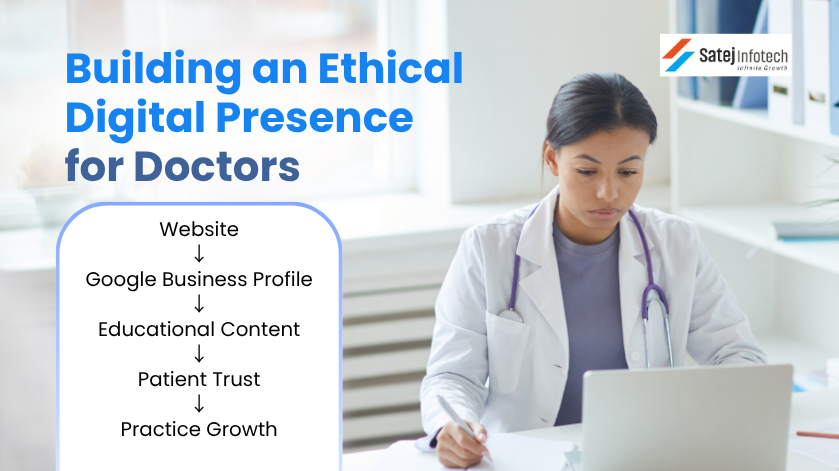
Why Doctors Need an Online Presence Today
Healthcare consumer behavior has changed dramatically.
Today’s patients:
- Search online before choosing a doctor.
- Read Google reviews.
- Look for specialists near them.
- Visit websites before booking appointments.
- Follow health-related content on social media.
If a doctor has no online presence, patients often struggle to find accurate information regarding:
- Qualifications
- Areas of expertise
- Clinic timings
- Services offered
- Appointment details
An ethical digital presence helps patients make informed decisions and improves healthcare accessibility.
Being visible online is not unethical.
Ethical doctor digital marketing focuses on making reliable healthcare information accessible rather than promoting unrealistic treatment outcomes.
Misleading patients is.
What Do the NMC Social Media Guidelines Actually Say?
The NMC’s social media guidance emphasizes that all written and visual communication by Registered Medical Practitioners should be:
- Truthful
- Professional
- Respectful
- Evidence-based
The principles of medical ethics do not disappear when a doctor logs into Instagram, Facebook, LinkedIn, or Google Business Profile.
The same standards apply online as they do inside the consultation room.
Every digital activity should be evaluated through the lens of:
- Patient welfare
- Professional integrity
- Scientific accuracy
- Confidentiality
- Public trust
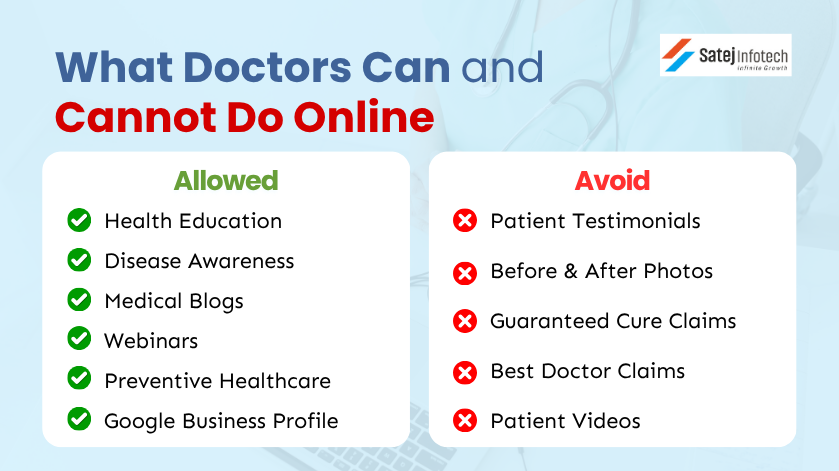
The Six Ethical Principles Every Doctor Should Follow Online
1. Patient Welfare Before Promotion
The primary objective of healthcare communication should be patient education and welfare.
Appropriate Content
- Disease awareness
- Preventive healthcare
- Vaccination education
- Lifestyle modification guidance
Inappropriate Content
- Fear-based messaging
- Emotional manipulation
- Creating unnecessary urgency
2. Reputation Is Earned, Not Advertised
A doctor’s professional standing should be based on:
- Qualifications
- Experience
- Research
- Clinical competence
- Ethical conduct
Acceptable Statements
- MD Medicine
- Fellowship in IVF
- 20 Years of Experience
Risky Statements
- Best Doctor in India
- Number One Specialist
- Most Trusted Surgeon
3. No Misleading Claims
Medical outcomes can never be guaranteed.
Avoid claims such as:
❌ Guaranteed Cure
❌ 100% Success Rate
❌ Permanent Solution
❌ Guaranteed Pregnancy
Instead, communicate treatment options, evidence, and realistic expectations.
4. Patient Confidentiality Is Sacred
Patient privacy remains one of the most important ethical obligations.
Doctors should avoid sharing:
- Patient photographs
- Videos
- Scan reports
- Laboratory reports
- Medical records
- Identifiable patient information
Even when educational intent exists, confidentiality must always come first.
5. Avoid Testimonials and Endorsements
Healthcare is fundamentally different from traditional consumer marketing.
Doctors should avoid:
- Video testimonials
- Success story campaigns
- Review-based advertisements
- Product endorsements
Trust should be built through expertise and education rather than patient promotion.
6. Online Conduct Equals Professional Conduct
Whether communicating through:
- YouTube
- Websites
- Google Business Profile
Doctors remain professionally accountable for their content.
Can Doctors Use Instagram?
Yes
Instagram can be a powerful educational platform when used responsibly.
Recommended Content
- Health awareness reels
- Frequently asked questions
- Myth vs Fact series
- Preventive healthcare tips
- Awareness day campaigns
- Lifestyle advice
Example Topics
- Before-and-after images
- Patient testimonials
- Treatment guarantees
- Misleading claims
- Comparative advertising
Avoid
- Before-and-after images
- Patient testimonials
- Treatment guarantees
- Misleading claims
- Comparative advertising
The objective should be education rather than self-promotion.
Can Doctors Have a Website?
Absolutely
A professional website is one of the safest and most effective digital assets a doctor can have.
A website may contain:
- Qualifications
- Experience
- Registration details
- Areas of expertise
- Services offered
- Appointment information
- Educational blogs
- FAQs
Website Content That Works Well
- Symptoms guides
- Treatment information
- Recovery advice
- Patient education resources
- Awareness articles
Avoid
- “Best Doctor” claims
- “Highest Success Rate”
- Guaranteed outcomes
- Patient testimonials
- Before-after galleries
A website should function as an educational resource and information portal.
Can Doctors Have a Google Business Profile?
Yes
Google Business Profile helps patients discover clinics through Google Search and Google Maps.
A properly optimized profile can include:
Appropriate Keywords
- IVF Specialist in Kolhapur
- ENT Doctor in Kolhapur
- Child Specialist in Kolhapur
Avoid
- Best IVF Doctor
- Number One ENT Specialist
- Highest Success Rate Clinic
The rule is simple:
Describe what you do, not how superior you claim to be.
Can Doctors Ask for Google Reviews?
This is one of the most misunderstood areas of healthcare marketing.
Organic Reviews
Patients may voluntarily leave reviews.
Doctors may politely acknowledge and respond to them.
High-Risk Practices
- Paying for reviews
- Incentivizing reviews
- Offering discounts for reviews
- Publishing review screenshots as advertisements
Creating testimonial campaigns
The safest strategy is to focus on patient experience and allow reviews to occur naturally.
Can Doctors Do SEO?
Yes
Ethical SEO is simply making useful information easier for patients to find.
Good SEO Topics
- Symptoms of Sinusitis
- Causes of Infertility
- What Is PCOS?
- Recovery After Hernia Surgery
- Vaccination Schedule for Children
Poor SEO Topics
- Why I Am the Best Doctor
- Why We Have the Highest Success Rate
- Why Patients Should Choose Me
The goal of healthcare SEO should be education, not self-promotion.
Can Doctors Run Google Ads?
Yes
Google Ads are not inherently unethical.
The content of the advertisement matters.
Appropriate Ads
- Book Consultation
- Learn About Treatment Options
- Specialist Consultation Available
- Download Patient Education Guide
Inappropriate Ads
- Guaranteed Cure
- Number One Doctor
- Highest Success Rate
- Best Specialist in India
Informational advertising is generally more defensible than promotional advertising.
Can Doctors Run Facebook and Instagram Ads?
Yes
Educational campaigns are often the safest approach.
Examples
- Diabetes Awareness Campaign
- Women’s Health Webinar
- Thyroid Awareness Guide
- Pregnancy Nutrition Checklist
- Cancer Screening Awareness Program
Use Caution With
- Appointment-focused campaigns
- Consultation lead forms
- Aggressive remarketing
Every campaign should be assessed from an ethical perspective before launch.
Can Doctors Use WhatsApp Marketing?
WhatsApp can be highly effective when used responsibly.
Appropriate Uses
- Appointment reminders
- Follow-up instructions
- Sharing reports
- Educational newsletters
- Patient-initiated communication
Avoid
- Cold messaging
- Purchased contact lists
- Procedure promotions
- Fear-based reminders
- Aggressive sales campaigns
Consent should always be the foundation of healthcare communication.
Can Doctors Use AI to Create Content?
Yes
AI tools can help doctors improve efficiency.
Examples include:
- ChatGPT
- Gemini
- Canva AI
- Gamma
- CapCut AI
- Claude
AI can assist with:
- Drafting content
- Generating ideas
- Creating outlines
- Designing educational materials
However:
Important Rule
AI-generated content must always be reviewed by the doctor before publication.
The responsibility for accuracy remains with the medical professional.
AI should assist expertise—not replace it.
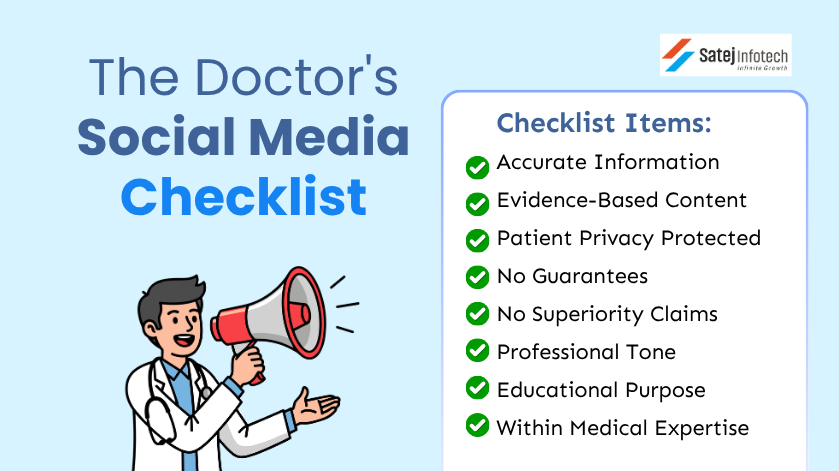
Patient Privacy: The Biggest Social Media Risk for Doctors
Many healthcare professionals underestimate the permanence of digital content.
Before posting any clinical material, ask:
- Can the patient be identified?
- Does the image reveal confidential information?
- Would I be comfortable explaining this post to a medical ethics committee?
Doctors should be especially cautious with:
- Procedure videos
- Clinical photographs
- Scan images
- Case discussions
- WhatsApp screenshots
Protecting confidentiality protects both the patient and the doctor.
Recent Supreme Court Observations and Public Trust
Recent judicial observations regarding misleading advertisements have reinforced a broader principle:
Professionals who enjoy public trust must exercise greater responsibility in public communication.
- Claims should be evidence-based.
- Promotions should not mislead.
- Advertising should not exploit vulnerable patients.
- Public communication should remain responsible.
The trend is toward greater accountability rather than unrestricted promotion.
Healthcare professionals occupy a position of exceptional trust.
Therefore:
The Green, Yellow and Red Zone Framework Green Zone (Generally Safe)
- Health education
- Disease awareness
- Public health campaigns
- Qualifications
- Services
- Research updates
- Educational blogs
- Webinars
Yellow Zone (Proceed Carefully)
- Awards
- Media appearances
- Experience-based positioning
- Consultation forms
- Clinic achievements
Red Zone (Avoid)
- Testimonials
- Before-and-after images
- Guaranteed outcomes
- Success rate claims
- Best doctor claims
- Patient endorsements
- Fear-based marketing
20 Safe Social Media Content Ideas for Doctors
- Myth vs Fact: Diabetes
- Early Signs of Thyroid Disease
- Common Causes of Infertility
- Understanding PCOS
- Vaccination Awareness
- Heart Health Tips
- Child Nutrition Guide
- Managing Allergies
- Women’s Health FAQ
- Men’s Health Awareness
- Sleep Hygiene Tips
- Stress Management
- ENT Warning Signs
- Cancer Screening Awareness
- Healthy Pregnancy Tips
- Seasonal Health Advice
- Understanding Hypertension
- What Is Fatty Liver Disease?
- Preventive Health Checkups
- Frequently Asked Patient Questions
Need more inspiration? Explore these content ideas for doctors to create educational posts that build trust with patients.
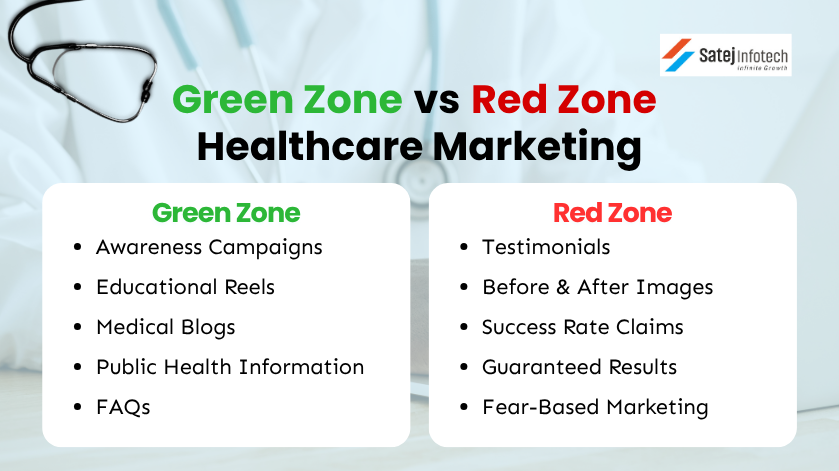
Ethical Digital Marketing Checklist for Doctors
- Before publishing any content, ask:
✅ Is the information accurate?
✅ Is it evidence-based?
✅ Does it protect patient privacy?
✅ Does it avoid guarantees?
✅ Does it avoid superiority claims?
✅ Is it educational?
✅ Is it within my expertise?
✅ Is it respectful?
✅ Would I be comfortable defending it professionally?
✅ Does it build trust rather than hype?
Before publishing any healthcare content, review this NMC compliance checklist to reduce the risk of unintentionally violating ethical standards.
Conclusion
The future of healthcare marketing is not louder advertising.
It is better education.
Doctors who consistently provide useful, accurate, and ethical information can build strong online visibility while maintaining professional integrity.
Patients do not merely choose the doctor with the biggest advertisement.
They choose the doctor they trust.
If you’re looking for real examples, see this healthcare marketing success story that demonstrates how patient education and ethical digital strategies can support sustainable clinic growth.
Doctors and healthcare practices looking to turn ethical digital visibility into sustainable patient acquisition can explore Business Growth Services for Doctors in India.
And trust is built through education, transparency, expertise, and ethical conduct.
Ethical medical marketing India is no longer about aggressive promotion. It is about educating patients, answering common questions, and building long-term credibility.
Your online reputation extends beyond your website and social media. Learn how one clinic addressed a fake listing in this online reputation management case study and why reputation management is an essential part of ethical healthcare marketing.
Frequently Asked Questions
Yes. Doctors can use Instagram for educational and awareness-based content while following professional and ethical guidelines.
Yes. Doctors can maintain professional websites containing qualifications, services, educational content, and appointment information.
Yes. Google Business Profiles help patients find clinic information, directions, contact details, and services.
Organic reviews are acceptable. Incentivized, purchased, or promotional review campaigns should be avoided.
Yes. Educational and informational advertisements are generally acceptable, while misleading or exaggerated claims should be avoided.
Before-and-after marketing content may create ethical concerns and should generally be avoided.
Yes. AI tools can assist with content creation, but doctors remain responsible for reviewing and verifying all medical information before publication.
Yes. Appointment reminders, follow-up instructions, and patient-initiated communication are generally appropriate uses of WhatsApp.
Educational content, disease awareness, preventive healthcare information, FAQs, and public health campaigns are generally the safest and most effective forms of content.
Need Help Building an Ethical Digital Presence for Your Clinic?
At Satej Infotech Pvt Ltd, we help doctors create:
- Professional Healthcare Websites
- Google Business Profile Optimization
- Local SEO for Clinics
- Educational Content Strategies
- Social Media Content Planning
- AI-Assisted Healthcare Marketing Systems
All designed around ethical healthcare marketing principles.
Want a FREE 15 Min Marketing Audit for Your Practice?Click the WhatsApp button below. 💬 Message “FREE 15 min Marketing Audit” on WhatsApp